


DH-A2 BGA Rework Station
Easy to operate.
Suitable for chips and motherboard of different sizes.
High successful rate of repairing.
Description
DH-A2 BGA Rework Station
1.Application Of DH-A2 BGA Rework Station
Suitable for Different PCBs
Suitable for PCBs used in computers, smartphones, laptops, MacBook logic boards, digital cameras, air conditioners, TVs, and other electronic equipment in the medical, communication, and automotive industries.
Suitable for Different Types of Chips
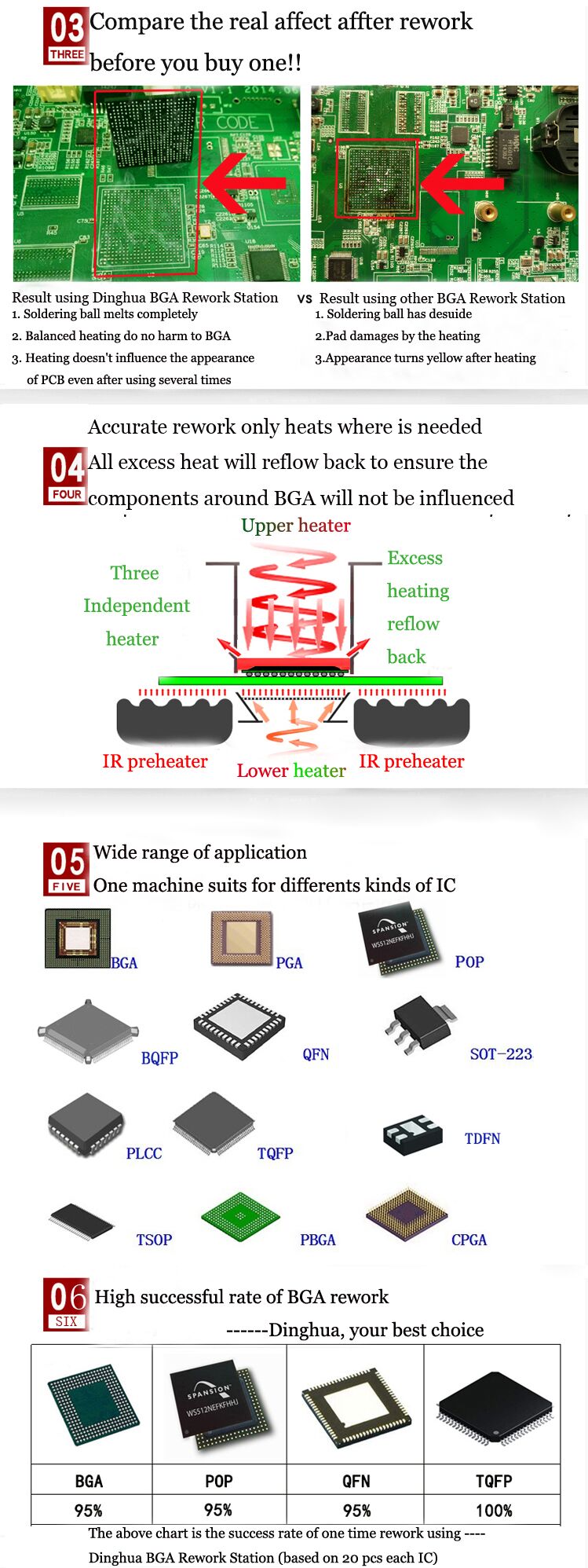
BGA, PGA, POP, BQFP, QFN, SOT223, PLCC, TQFP, TDFN, TSOP, PBGA, CPGA, and LED chips.
2.Product Features of DH-A2 BGA Rework Station

• Desoldering, mounting and soldering automatically.
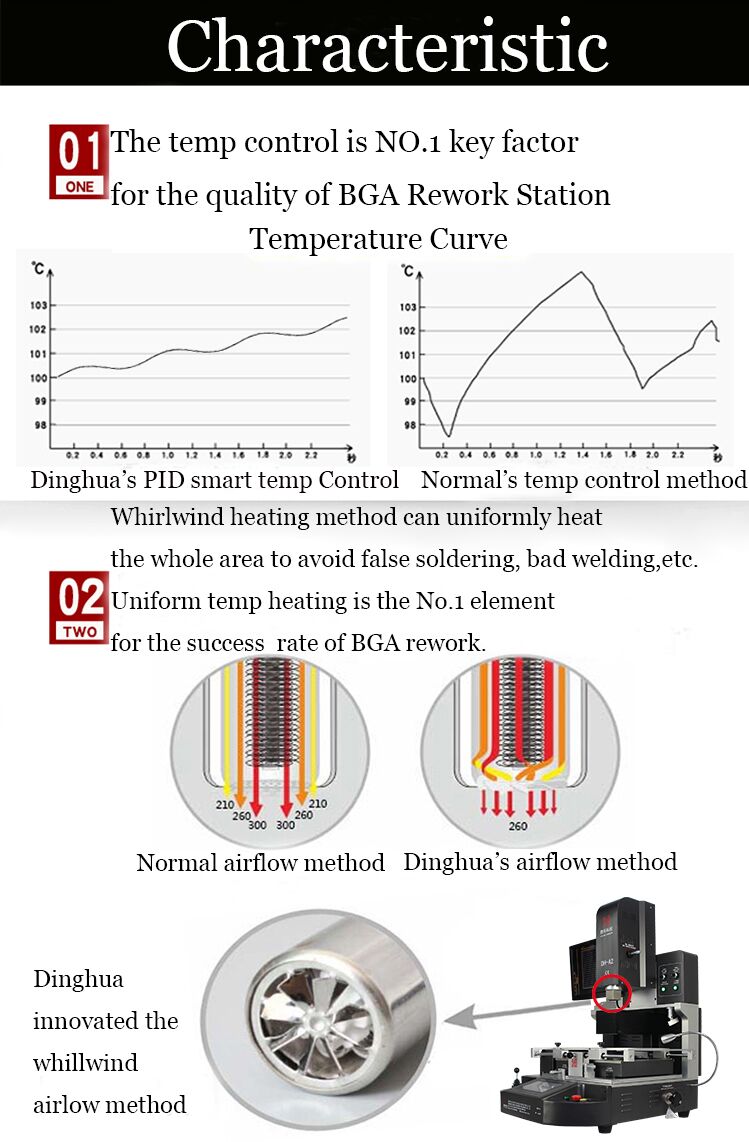
• Characteristic of high volume (250 l/min), low pressure (0.22kg/ cm2), low temp (220°C) rework completely
guarantees BGA chips electricity and excellent soldering quality.
•Utilization of silent and low pressure type air blower permit the regulation of silent ventilator, the air flow can
be regulated to 250 l/Min the maximum.
•Hot air multi-hole round center support is especially useful for big-size PCB and BGA located in the center of
PCB. Avoid cold soldering and IC-drop situation.
•Temperature profile of bottom hot air heater can reach as high as 300°C, critical for big size motherboard.
Meanwhile, upper heater could be set as synchronized or independent work
3.Specification of DH-A2 BGA Rework Station

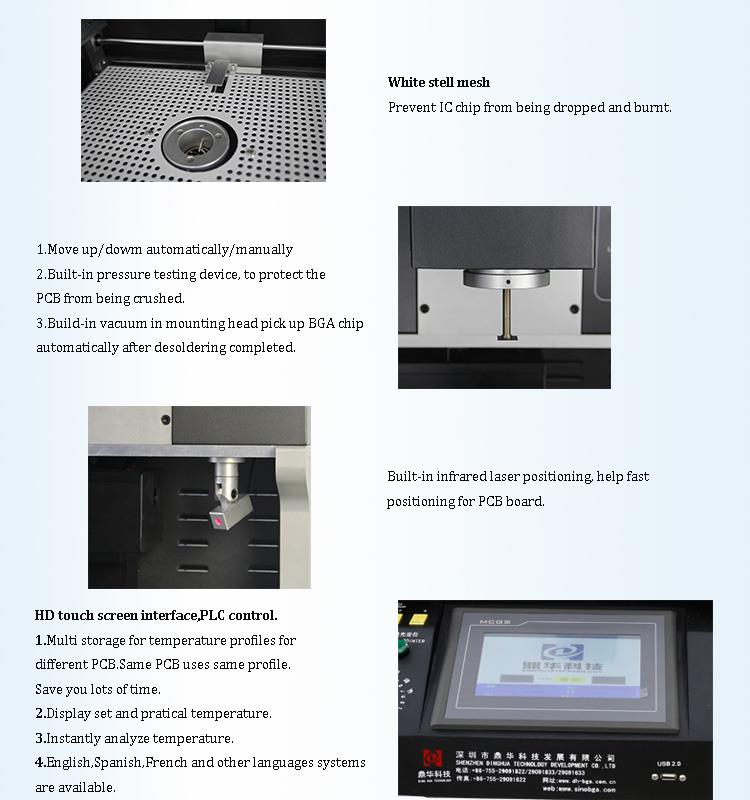
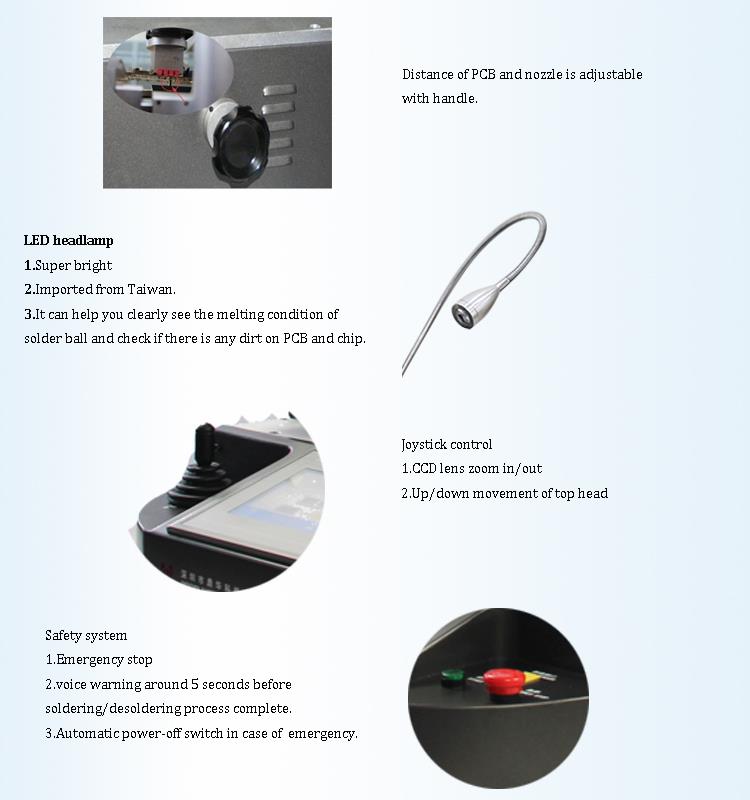
4.Details of DH-A2 BGA Rework Station

5.Why Choose Our DH-A2 BGA Rework Station?
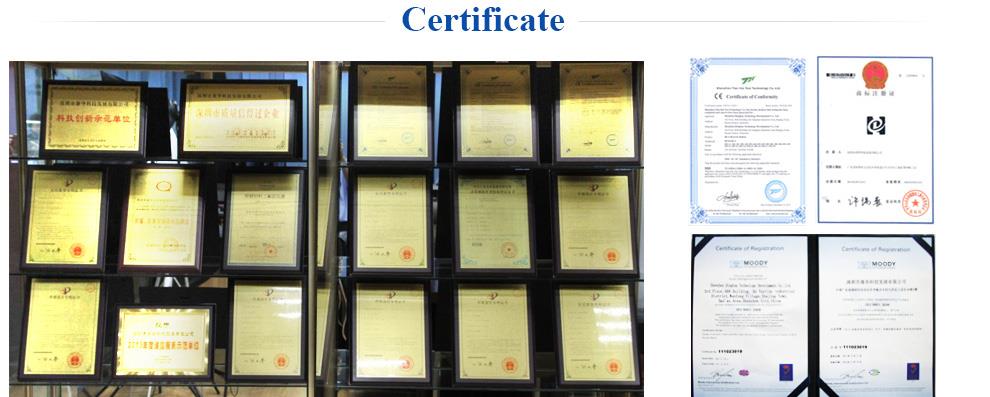
6.Certificate of DH-A2 BGA Rework Station
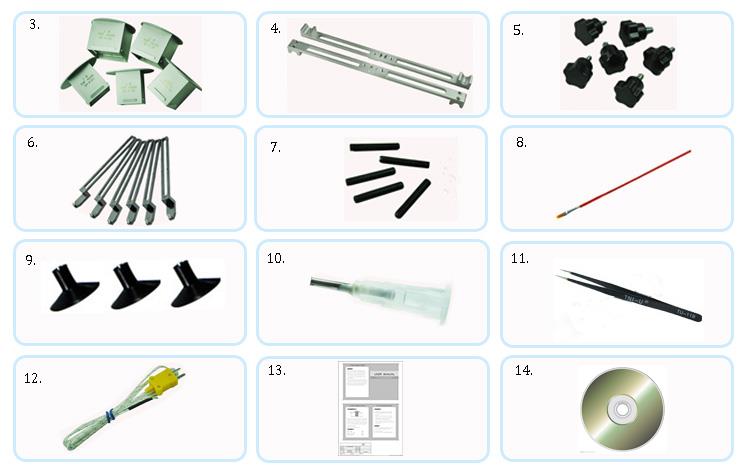
7.Packing & Shipment of DH-A2 BGA Rework Station

8.Related knowledge of DH-A2 BGA Rework Station
•What are BGA welding process technology principle?
Principle of Reflow Soldering Used in BGA Soldering
This section introduces the reflow mechanism of solder balls during the soldering process.
When a solder ball is exposed to a heated environment, the reflow process can be divided into three stages:
Preheating
First, the solvent used to achieve the required viscosity and screen-printing performance begins to evaporate. The temperature increase must be slow
(about 5 °C per second) to limit boiling and splashing, prevent the formation of small solder beads, and reduce internal stress in components.
For temperature-sensitive components, if the external temperature rises too quickly, cracking or damage may occur.
During this stage, the flux (paste) becomes active and chemical cleaning begins. Both water-soluble flux and no-clean flux provide the same cleaning effect, although their activation temperatures differ slightly. Metal oxides and certain contaminants are removed from the metal surfaces and solder particles to be bonded. High-quality metallurgical solder joints require a clean surface.
As the temperature continues to rise, the solder particles begin to melt individually and enter the initial liquefaction stage. Surface tension causes the molten solder to wet all available surfaces and start forming solder joints.
Reflow
This is the most critical stage. When individual solder particles are fully melted, they merge to form liquid solder. At this point, surface tension shapes the solder fillet.
If the gap between the component leads and the PCB pads exceeds 4 mils (1 mil = one thousandth of an inch), surface tension may separate the lead from the pad, resulting in an open solder joint.
Cooling
During the cooling stage, faster cooling can slightly increase solder joint strength. However, cooling must not be too rapid, as excessive temperature stress may be introduced inside the component.


