


What Is Soldering Machine
A soldering machine is a device used to join two or more metal components by melting a metal alloy (solder) and then cooling it to form a strong bond. Soldering machines are typically powered by electricity and use a soldering iron, soldering gun, or soldering torch to heat and melt the solder. The process of soldering is used in many industries, such as electronics, automotive, and jewelry making. It is used to join wires and components together and create electrical connections. Soldering machines are used to ensure that the connections are secure and that the components are properly insulated.
Advantages of Soldering Machine
Does not warp
Since solder flows at lower temperatures, the metals connected do not melt or warp. They maintain their original size and shape, even if the person soldering makes mistakes.
Solder conducts electricity
The solder flows between the electrical connectors to bond them together. Since the solder is metal, it conducts electricity.
Multiple connections
Circuit boards floated on a molten solder bath make multiple connections with a single operation. The solder only sticks to the components and not the board itself.
Easy-to-learn
Soldering does not require any particular skill. You can learn to solder electronic components, plumbing and jewelry with easy-to-follow instructions found on several websites.
-

The PCB soldering robot automatic is a revolutionary development in the field of electronics manufacturing. This advanced technology offers a highly efficient and accurate method for soldering
Add to Inquiry -
Soldering Machine At Low Price
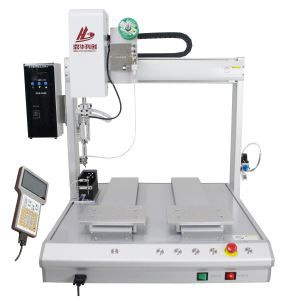
US $1000.00-$6000.00 / Piece1 Piece Min. Order Dimensions: L880*W700*H830mm Weight: Appr.85KG Rated Capacity: 4800W Current: 20A Voltage: AC 110~240 V±10% 50/60Hz Rated Duty Cycle: 100%
Add to Inquiry -
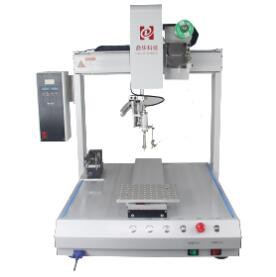
US $1000.00-$7000.00 / Piece1 Piece Min. Order Dimensions: L850*W660*H830mm Weight: Appr.95KG Rated Capacity: 800W Voltage: AC 110~240 V±10% 50/60Hz Rated Duty Cycle: 100%
Add to Inquiry -
US $1000.00-$7000.00 / Piece1 Piece Min. Order Dimensions: L850*W660*H830mm Weight: Appr.95KG Rated Capacity: 800W Voltage: AC 110~240 V±10% 50/60Hz Rated Duty Cycle: 100%
Add to Inquiry -
Soldering Machine home depot from China
US $1000.00-$7000.00 / Piece1 Piece Min. Order Dimensions: L850*W660*H830mm Weight: Appr.95KG Rated Capacity: 800W Voltage: AC 110~240 V±10% 50/60Hz Rated Duty Cycle: 100%
Add to Inquiry -
Soldering Machine Kaise Banate Hain
US $1000.00-$6000.00 / Piece1 Piece Min. Order Dimensions: L880*W700*H830mm Weight: Appr.85KG Rated Capacity: 4800W Current: 20A Voltage: AC 110~240 V±10% 50/60Hz Rated Duty Cycle: 100%
Add to Inquiry -
Automatic Welding Machine For Motherboard
1. Automatic welding machine for motherboard. 2. X,Y,Z Axis.3. Customized service can be offered.4. Looking for agents in global market.
Add to Inquiry -
Automatic Soldering Machine Arc Welding
One Head one station automatic soldering machine.
Add to Inquiry -
Add to Inquiry
-
US $1000.00-$7000.00 / Piece1 Piece Min. Order Dimensions: L850*W660*H830mm Weight: Appr.95KG Rated Capacity: 800W Voltage: AC 110~240 V±10% 50/60Hz Rated Duty Cycle: 100%
Add to Inquiry -
The top quality, stable performance, cost-effective Desktop PCB soldering machine Supplied by the 9 years professional Chinese automatic machines designer and Manufacturer Shenzhen Dinghua Innovation
Add to Inquiry -
Desktop Selective Soldering Machine
The top quality, stable performance, cost-effective Desktop selective soldering machine Supplied by the 9 years professional Chinese automatic machines designer and Manufacturer Shenzhen Dinghua
Add to Inquiry




Why Choose Us
Professional team
Our professional team collaborates and communicates effectively with each other, and is dedicated to delivering high quality results. We are capable of handling complex challenges and projects that require our specialized expertise and experience.
High quality
Our products are manufactured or executed to a very high standard, using the finest materials and manufacturing processes.
Advanced equipment
A machine, tool or instrument designed with advanced technology and functionality to perform highly specific tasks with greater precision, efficiency and reliability.
Competitive price
We offering a higher-quality product or service at an equivalent price. As a result we have a growing and loyal customer base.
Customized services
We understand that each customer has unique manufacturing needs. That’s why we offer customization options to cater to your specific requirements.
24H online service
We try and respond to all concerns within 24 hours and our teams are always at your disposal in case of any emergencies.
Types of Soldering Machine
Soldering instruments include soldering machines. There are various soldering machine types. The soldering iron can be described as a hand tool utilized in heating solder at a high temperature which is higher than the metal alloy’s melting point, typically from the electrical source. This enables this solder to move easily between these workpieces that need to be connected. The soldering tool has a pointed and heated metal tip as well as an insulated grip. How clean your soldering iron’s tip is will affect how well it solders. Before soldering the components or creating soldered connections, a user would hold this soldering iron as well as clean its tip with a moist sponge to ensure cleanliness. Solder suckers form a crucial component of soldering setup coupled with its soldering iron. These tiny tools are utilized to scrape out excess solder, retaining only the desired amount. As irons require less power, soldering guns were utilized for tasks where higher heat is needed. For combining stained glass, thin sheet metal, as well as challenging electronic soldering operations, utilizes this instrument. This soldering gun seems significantly more useful when there is a need to only solder occasionally because it cools down much faster.
The method of soldering allows two components to be connected. Would using an adhesive be preferable or would soldering be the best option? Given that the solder frequently has a less melting point compared to the remaining components, it is not affected by this heat. Temporary and Permanent Joints: immediately the hardening of the solder happens, it creates a highly solid link that cannot be broken. It may be desoldered, nevertheless, without causing any harm to other parts. Joints that are both permanent and temporary in one! So far this solder features a low melting point than the metal being joined, soldering may be employed to join the different metals. Anyone may rapidly learn how to solder, and it is a simple skill to acquire. Additionally, it is an extremely quick method of joining things together, which is excellent for DIY projects. Choose the appropriate soldering temperature that suits your project based on those materials that you’re soldering as well as the type of solder you’re utilizing. As a general guideline, pick the one having the least temperature to achieve the desired result. Hold a bit of solder inside one hand then a soldering iron for the other once this iron has reached the desired temperature. Place your hot iron briefly where the two components converge. Keep in mind that these metals only need to be heated slightly. Now, touch these hot components with the solder. This gap in-between these two components would be filled in when the solder melts. The quantity of solder required varies depending on the project or the component in question. Before beginning your project, if you’re a newbie, practice on the scrap parts of the electronic components. Give the solder time to cool. A strong, homogeneous connection will be visible. There should be no voids or large spaces of solder. You will have to add more solder to close any gaps. To fix the joint when there are some blobs, you need to desolder. Desoldering could be required to repair a certain type of joint. Perhaps you soldered too much by mistake! You only have to reheat this iron onto the necessary temperature as well as melt your solder, so don’t worry. To remove extra solder, use the solder sucker that resembles a syringe. Another tool you can make use of is the desoldering braid. After the repair is complete, you must clean up the place and keep your equipment. To clean the tip, all you must do is utilize a metal or cloth wool. Keep it in an airtight container. Likewise, to avoid oxidation and lengthen the lifetime of your iron, store your soldering iron inside any sealed container.

Solder is frequently used by roofers to fuse copper roof components together. The construction of flashing roofs also uses it. The typical soldering iron meant for roofing typically has a large tip which can heat up extremely quickly and can be frequently used because roofing doesn’t really require the same level of precision as working with microscopic components. The plastic-made circuit boards are utilized in electronics, including them among the soldering iron’s most popular applications. During the joining of the two wires, the solder’s metal alloy ensures the continuance of the electrical current. The accuracy required for these frequently necessitates the utilization of more precise instruments, such as temperature regulation for soldering irons. Electricians splice different wires for commercial or residential wiring using soldering irons, much like they do with the circuit boards. Additionally, they make use of them to fuse wires in the electrical terminals and control panels. Solder is frequently used in filling uneven areas, smooth out any rough surfaces, and tighten joints even if it is not that strong to repair engines. Along with bodywork for your car, it may be utilized to patch holes, join metal panels, as well as tin the metal sheets’ edges. The soldering iron is also frequently used for do-it-yourself projects around the house. Due to the vast subject, as well as the standard soldering iron, there are several soldering equipment to pick from, including the soldering pencil and the soldering gun.
How Does Soldering and a Soldering Machine Work
A soldering machine is any piece of equipment used for the purpose of soldering, in which a metal alloy - traditionally made from tin and lead - becomes a filler material that is primarily used to create a soldered joint between two components. The most common purposes of this are to build a smooth connection between two different pieces of metal or to support the continuation of electrical conductivity. A soldering machine is a piece of equipment that heats the solder alloy material into a liquid state (at around 600 degrees Fahrenheit) and then applies the melted materials to fill the space between the two target components. The liquid is then allowed to cool and bond, creating a permanent join - although solder material can be removed if reheated back to a liquid state. While lead was traditionally used for soldering, changing regulations mean that non-lead alternatives are now commonly utilized. They include antimony, bismuth, brass, copper, indium, tin and silver. The definition of a soldering machine could cover anything from a simple soldering pencil or handheld soldering gun to an industrial soldering machine. The best machinery will include workstations and allow you to benefit from automatic dip solders and angle turns, allowing you to focus only on putting the coil to the fixture and subsequently unloading the finished piece by hand. Soldering processes also need to use a flux, which removes the oxide films that naturally form on metal surfaces during the soldering process. In turn, the flux increases the wetting ability of the solder metals, which promotes a smoother application.
Explaining Different Soldering Machine Types
Soldering machines are an important tool that may be used in a wide range of industries, including automotive repairs, manufacturing,electronics. Essentially, any sector where joining metals together through a melted solder material could be beneficial is likely to utilize a soldering machine. When looking at different types of soldering machine, you need to appreciate the different types of soldering tools. A soldering iron is a relatively light hand tool that features an insulated handle and a heated pointed metal iron tip. Alternatively, a soldering gun has a loop shaped tip that can deliver increased power and flexibility. Dial a variety of temperatures rather than the set temperature as is the case with standard soldering irons. Utilize different jig setups, using different soldering tips to suit the specific job that you need to complete. Control the volume of your dip flux with far greater accuracy to achieve the best soldering results for each job. You can also automatically set soldering times,blowing time or bending, giving you a truly comprehensive and professional approach to soldering production.
Precise Tip Temperature Control of Soldering Machine
In the world of soldering, precision is king. Traditional soldering stations rely on manual adjustments, requiring operators to fine-tune the temperature as they work. This can be a tricky task, as the temperature of the soldering tip fluctuates depending on its interaction with the components being soldered. Smart soldering stations, however, take the guesswork out of temperature control. They are equipped with sensors or thermocouples near the heating element, ensuring that the tip maintains a constant temperature. No more adjusting on the fly – the smart station does it for you. Soldering iron tips are susceptible to oxidation, especially at higher temperatures. This oxide formation can negatively impact the soldering process. Smart soldering stations keep the tip at a constant, low average temperature, which significantly reduces the rate of oxidation. Say goodbye to frequent tip cleaning and replacements. With consistent temperature maintenance, smart soldering stations extend the life of your soldering iron tip. Traditional setups, with their temperature fluctuations, put more wear and tear on the tip. In contrast, a smart station's precise temperature control ensures that the tip stays in optimal condition for longer periods. Smart soldering stations come equipped with digital displays that show the current temperature in real-time. This visual feedback ensures you are always aware of the soldering tip's temperature, enabling you to make quick adjustments if needed. Monitoring temperature changes in real-time improves soldering accuracy and reduces the risk of overheating components.
The debate of which soldering tools is better, an automatic soldering machine, a soldering station or a soldering iron, is one that has been around for a long time. It is important to consider the specific needs of the project before determining which one is best suited.A industrial automatic soldering machine is a type of equipment used in the manufacturing industry. The machine uses heat and pressure to melt the filler, which is usually a lead-free alloy such as tin-silver or tin-copper. The machine is usually automated, meaning it can be programmed to perform different soldering tasks. An industrial automatic soldering machine is a fully automated system that is designed to perform soldering operations on a production line. It typically consists of a robotic arm, soldering head, vision system, and a control system. The robotic arm is programmed to move the soldering head over the components to be soldered and the vision system is used to detect the position of the components. The control system is used to monitor the soldering process and ensure the quality of the finished product. Soldering machines are ideal for large scale projects that require a high degree of precision. They are typically used in assembly line production and can be programmed to solder specific components with great accuracy.

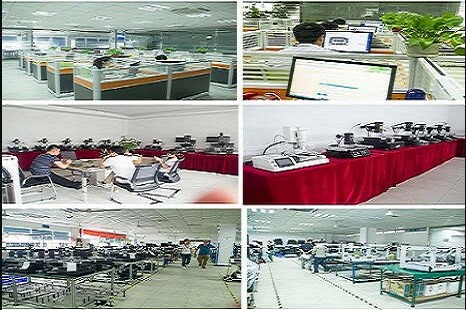
Our Factory
Shenzhen Dinghua Technology Development Co., Ltd. is a national high-tech enterprise integrating R&D, production, sales and service! Which is a professional BGA rework station, automatic soldering machine, Xray inspection machine, U-shaped line transformation and non-standard automation system solutions and industrial equipment providers! The company is "based on research and development, quality is the core, service is the guarantee", and is committed to creating "professional equipment, professional quality, and professional service"!




FAQ
