

How to deal with counterfeit ICs in replacement?
Nov 25, 2026
Hey there, let's cut to the chase – if you're in electronics manufacturing, repair, or even product prototyping, you've definitely run into counterfeit ICs. I'm the owner of an IC replacement supply company, and over the last 8 years, I've seen firsthand how a single fake component can tank a production run, wreck a $10k prototype, or even get a commercial product recalled. Counterfeit ICs aren't just a "small problem" anymore – they're a costly, dangerous headache that no one in this game can afford to ignore.
Wait, let's be real: counterfeiting has gotten way smarter. Back in the day, fakes were obvious – scratchy markings, wrong part numbers, components that looked like they'd been dug out of a dumpster. Now? Bad actors take real, working ICs, scrape off the original markings, repackage them, and print exact part numbers, lot codes, and even date codes that match the real deal. You could be buying from a supplier you've used for years and never suspect a thing – until your SMT line catches fire because a fake power IC shorts out, or your medical device fails a safety test because a fake microcontroller miscalculates critical data.
So, as an IC replacement supplier that's built our business on getting customers real, verified parts when they need them, here's the playbook we live by for dealing with counterfeit ICs when they sneak into replacement stock – and how you can spot, avoid, and fix this mess if it hits your operation.
First up: stop counterfeits before they get into your stock. That sounds simple, but it's where 90% of the mistakes happen. A lot of replacement suppliers cut corners here – buying bulk untested lots from overseas marketplaces, skipping verification steps, because it's faster and cheaper. But that's how counterfeils slip through. Our team does things differently, and I'll walk you through our process, because this is non-negotiable for us.
When we source replacement ICs, we only work with authorized distributors and verified manufacturers' direct lines. No more Alibaba bulk lots with "excess inventory" that's actually fakes. Every single lot we receive goes through three layers of verification before it even hits our warehouse shelves. First, visual inspection under a high-powered microscope: we check for micro-marks that real manufacturers put on packaging, part number alignment, lead frame finish, and any signs of re-marked parts (like uneven ink, tiny scratches from a scraper). If anything's off, that entire lot gets rejected immediately.
Second, we do electrical testing. Not just a quick continuity check – full function and parametric testing on every part, especially for high-reliability ICs like automotive, medical, or aerospace components. A fake microcontroller might look right, but it runs at 20% lower speed or has hidden security flaws that cause crashes. We use test benches customized for each IC type, so we catch those issues before they get to a customer.
Third, we track every part all the way back to its origin. We keep lot numbers, COCs (Certificates of Conformance), and shipping manifests on file for every IC in our inventory. If a customer ever has an issue with a part, we can trace it back to the exact batch, supplier, and production run – which is how we caught a bad lot of fake MOSFETs a few years back, before we shipped any to clients.
But here's the thing: even with all that, counterfeils still occasionally slip through. How? Because some parts are so new, or so niche, that the testing takes extra time, or a bad actor manages to pass a small lot as real. When that happens, the next step is how you handle it – and that's where our repair and replacement process kicks in for customers.
Let's say you've already got a counterfeit IC soldered onto a PCB – that's the worst case. Solder is a nightmare to remove, especially for BGA components, which are super common in smartphones, medical devices, and industrial controllers. Trying to desolder a BGA by hand? You'll crack the PCB trace or damage adjacent components, which turns a $0.50 fake IC issue into a $500 PCB rework. That's where the right equipment matters – and we use top-tier tools to fix this fast.
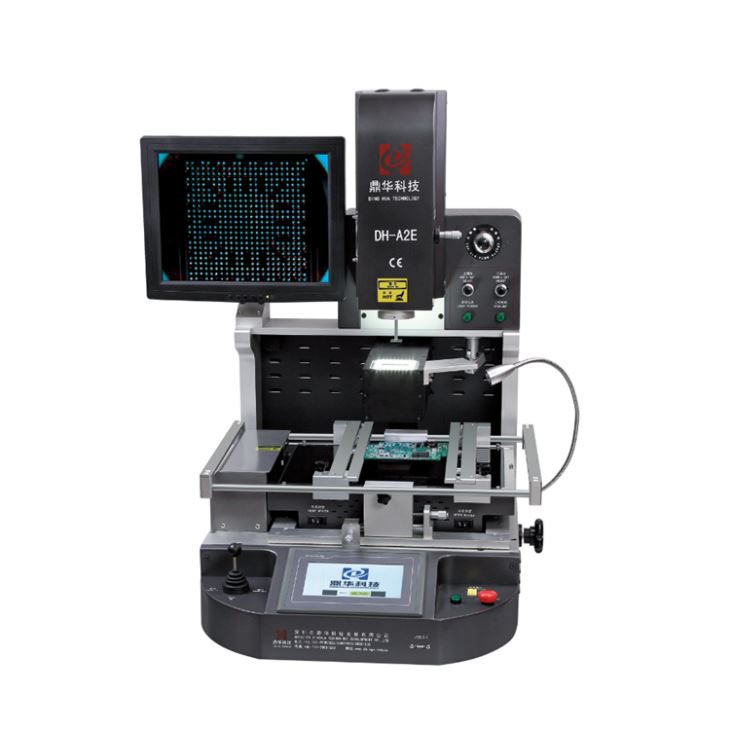
When we get a customer's PCB with a faulty (fake or otherwise) BGA IC, our techs start with inspection first. We use high-powered microscopes to map the PCB's BGA pads, check for damage, and confirm the part number and pinout match. Then, we remove the old IC using a carefully calibrated rework process – here's where our equipment comes in: we have a Semi Automatic Optical Alignment BGA Reballing Machine for consistent, accurate pad cleaning, and an Infrared BGA Rework Station Automatic that controls heat evenly so we don't warp the PCB. No more guesswork with heat guns that can melt plastic packaging or delaminate PCBs.
Once the old IC is off, we reball the new, verified IC – that means we solder tiny solder balls onto the new IC's BGA pins, aligned perfectly with the PCB's pads. For this step, we also use a Laser Positioning BGA Welding Tools, which lets us align the new IC with 0.01mm precision – way better than manual alignment, which is prone to human error. We have a full BGA Rework System set up in our shop, and our techs have 10+ years of experience using these tools, so we can rework a 100+ pin BGA in under 30 minutes, with a 99.8% success rate – way faster and cheaper than sending a PCB out to a third-party repair shop.
Wait, I know what some of you are thinking: "Why not just buy new parts and rework myself?" Sure, if you have the time, space, and expertise. But most small to mid-sized electronics manufacturers don't have a dedicated rework lab, the expensive equipment, or the trained staff. That's where we come in – we offer IC replacement, PCB rework, and verification services that take the headache out of dealing with fakes.

Now, let's talk about how you, as a customer, can spot a counterfeit IC before you even solder it on. We give all our clients a quick checklist they can use, even if they're not a tech expert. First, check the packaging: real ICs come in anti-static tubes or reels, with part numbers printed clearly, no smudges, and lot codes that are consistent. If the reel has misaligned labels, or the tube looks like it's been opened and re-sealed, that's a red flag. Second, check the markings: hold the IC up to light – if the ink looks scratched, or the part number font is uneven, it's probably a fake. Third, check the price: if an IC that usually costs $5 is being sold for $0.50, it's counterfeit. Simple as that – if it's too good to be true, it is.
I also want to call out something that a lot of people miss: counterfeit ICs don't just cost money in rework. For industries like automotive, medical, or aerospace, a fake IC can be a safety hazard. A few years back, we had a client in the industrial robotics space that got a batch of fake motor driver ICs – they were cheap, so the client thought they were getting a deal, but the fakes would send wrong voltage signals, making a robotic arm malfunction during operation. The client had to recall 20 units, costing them $200k in lost revenue and reputation. That's not a problem – that's a crisis.
So, what's our takeaway here? Dealing with counterfeit ICs isn't just about punishing bad actors – it's about building a supply chain that's verified, transparent, and focused on quality. As an IC replacement supplier, we don't just sell parts – we offer peace of mind. Every part we ship has a full COC, we test every lot, and we stand behind every replacement we do. If you get a fake part from us, we'll replace it, cover any rework costs, and work with you to fix whatever went wrong – no fine print, no runaround.
If you're tired of dealing with counterfeit ICs derailing your projects, or if you need reliable IC replacement, PCB rework, or verification services, reach out to our team. We'll walk you through our process, answer any questions you have, and help you make sure your projects are built on real, working components that won't cause headaches down the line.