

Can rework improve the overall value of a product?
Sep 07, 2026
Hey there! As a rework supplier, I've been in the thick of the manufacturing and electronics game for a while now. One question that keeps popping up is, "Can rework improve the overall value of a product?" Well, let's dive right into it.
First off, let's understand what rework really means. Rework is the process of fixing or modifying a product that doesn't meet the required standards or specifications. It could be anything from correcting a manufacturing defect, upgrading a component, or enhancing certain features. In the electronics industry, where I mainly operate, rework can involve tasks like replacing a faulty BGA (Ball Grid Array) chip, fixing a soldering issue, or adding new functionality to a circuit board.
Now, let's talk about how rework can actually boost a product's value. One of the most obvious ways is by reducing waste. In manufacturing, a significant amount of resources goes into producing each unit. If a product comes out with a minor defect and is simply discarded, it's a huge waste of materials, energy, and money. By reworking these products, we can salvage them and bring them up to the required quality level. This not only saves resources but also cuts down on costs associated with producing new units. For example, if a batch of circuit boards has a few soldering issues, instead of scrapping the whole lot, we can use tools like the Bga Rework Stations Infrared to correct the soldering and get the boards back in working condition.
Another way rework adds value is by improving product reliability. When a product is reworked, it's often inspected thoroughly to identify and fix all potential issues. This means that the reworked product is likely to have fewer failures in the long run. Customers are more likely to trust and continue using a reliable product, which in turn enhances the brand's reputation. For instance, if a manufacturer notices that a particular model of their product has a high failure rate due to a specific component, they can rework the affected units to replace that component with a more robust one. This will not only reduce the number of returns but also increase customer satisfaction.
Rework can also be a great opportunity for product improvement. Sometimes, during the rework process, we discover better ways to design or assemble a product. We can use this knowledge to make changes to future production runs, which can lead to enhanced performance, functionality, or ease of use. For example, if we find that a certain component is difficult to access during rework, we can modify the product's design to make it more accessible in future versions. This continuous improvement cycle can give a company a competitive edge in the market.
Let's take a closer look at some of the tools we use in the rework process. The Smt Xray Counter is an incredibly useful device. It allows us to inspect the internal structure of a component or a circuit board without having to disassemble it. This is especially important when dealing with hidden defects like cracked solder joints or misaligned components. By using the X-ray counter, we can quickly identify these issues and take the necessary steps to fix them.
The Infrared Desoldering Station is another essential tool in our arsenal. It uses infrared radiation to heat up the solder, making it easy to remove components from a circuit board. This method is more precise and less damaging compared to traditional soldering irons. It also allows us to work on delicate components without causing any thermal stress.
When it comes to reworking BGA chips, our BGA Rework Station Automatic DH - A2E is a game - changer. It's automated, which means it can perform the rework process with high precision and consistency. It has advanced features like temperature control, vacuum pick - and - place, and optical alignment. This ensures that the BGA chip is re - soldered correctly, reducing the chances of future failures.
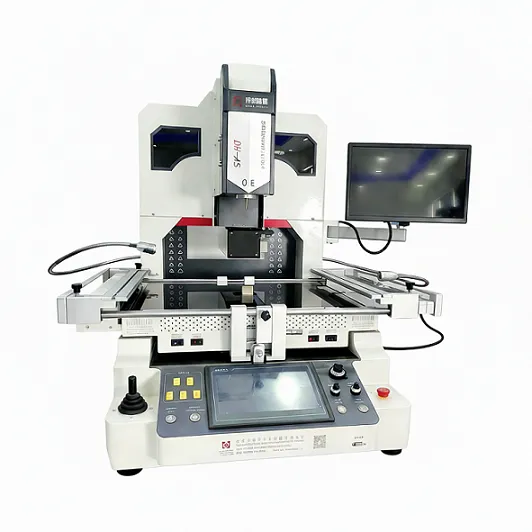

The CCD Camera BGA Rework Station is also very popular. The CCD camera provides a clear visual of the rework area, allowing us to see the component and the soldering points in detail. This is crucial for accurate alignment and soldering, especially when working with small and complex components.
Of course, there are some challenges associated with rework. One of the main challenges is the cost. Rework can be expensive, especially if it involves replacing high - cost components or using specialized equipment. However, when you consider the cost of producing a new product from scratch and the potential loss of customers due to product failures, rework can actually be a cost - effective solution in the long run.
Another challenge is the time it takes to rework a product. In a fast - paced manufacturing environment, any delay can impact the production schedule. But by optimizing the rework process and using efficient tools, we can minimize the time spent on rework.
In conclusion, rework can definitely improve the overall value of a product. It helps in reducing waste, improving reliability, and facilitating product improvement. As a rework supplier, I've seen firsthand how the right rework process and tools can transform a defective product into a high - quality, valuable item.
If you're in the manufacturing or electronics industry and are looking for a reliable rework partner, we're here to help. We have the expertise and the tools to handle all your rework needs. Whether it's a small - scale project or a large - scale production run, we can provide customized solutions to meet your requirements. Don't hesitate to reach out to us for a consultation and let's start improving the value of your products together!