

What is the difference between 2D and 3D PCB X-ray inspection?
Jun 04, 2026
Hey there! As a supplier of PCB X-ray inspection equipment, I often get asked about the differences between 2D and 3D PCB X-ray inspection. So, I thought I'd break it down for you in this blog post.
Let's start with 2D PCB X-ray inspection. It's like taking a simple snapshot of your PCB. You send an X-ray beam through the board, and the detector on the other side captures a flat, two - dimensional image. This method is great for quickly checking the basic layout of components on the PCB. For example, it can easily show if there are any obvious shorts, opens, or misaligned components. It's also relatively fast and cost - effective. If you're just doing a quick quality check on a large number of PCBs, 2D X-ray inspection is a go - to option.
One of the main advantages of 2D X-ray inspection is its simplicity. You don't need a lot of technical know - how to operate the equipment. The images are straightforward to interpret, even for those who aren't experts in X-ray technology. It's also great for getting a general overview of the PCB's condition.
However, 2D X-ray inspection has its limitations. Since it's a flat image, it can't show the depth or the internal structure of components very well. If you have multiple layers of components stacked on top of each other, it can be difficult to tell what's going on beneath the surface. For instance, if there's a hidden solder joint issue inside a multi - layer component, a 2D X-ray might not be able to detect it accurately.
Now, let's talk about 3D PCB X-ray inspection. This is like taking a 3D movie of your PCB. Instead of a single flat image, 3D X-ray inspection creates a three - dimensional model of the PCB. It does this by taking multiple X-ray images from different angles and then using software to reconstruct the 3D view.
The biggest advantage of 3D X-ray inspection is its ability to show the internal structure of components in great detail. You can see exactly where the solder joints are, how the components are stacked, and if there are any hidden defects. This is especially important for high - density PCBs with complex components. For example, in modern smartphones, the PCBs are very compact, and 3D X-ray inspection can help identify any issues that might not be visible with 2D inspection.
3D X-ray inspection also allows for more accurate measurement and analysis. You can measure the size, shape, and position of components with high precision. This is crucial for ensuring that the PCBs meet the required specifications.
But 3D X-ray inspection also has some drawbacks. It's more expensive than 2D inspection, both in terms of the equipment cost and the operating cost. The equipment is more complex, and it requires more skilled operators. Also, the inspection process takes longer because it needs to capture multiple images and then process them to create the 3D model.
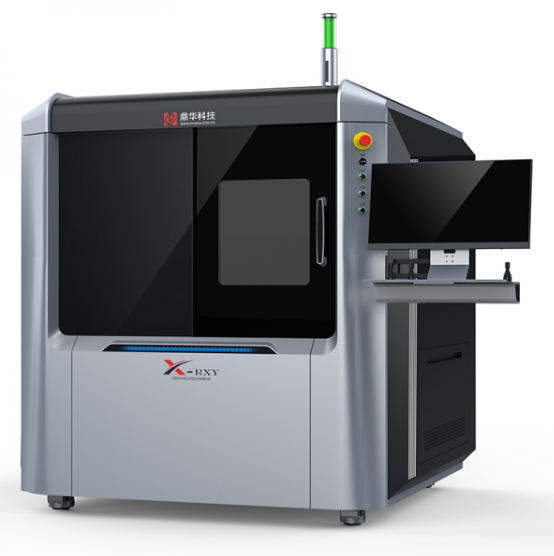
If you're interested in our X-ray inspection solutions, we offer a range of products. For 2D and 3D inspection, we have the Xray Inspection Machine. This machine is designed to provide high - quality X-ray images, whether you need a simple 2D overview or a detailed 3D model.
Our Industrial Ct Scanner is another great option for more in - depth 3D inspection. It can provide even more detailed information about the internal structure of PCBs and other industrial components.
And if you're looking for a comprehensive X-ray inspection solution, our X Ray Inspection Equipment offers a variety of features to meet your needs.
So, which one should you choose? It really depends on your specific requirements. If you're on a tight budget and just need a quick check for basic issues, 2D X-ray inspection might be the way to go. But if you're dealing with high - end, complex PCBs and need to detect hidden defects, 3D X-ray inspection is worth the investment.
If you're still not sure which option is best for you, don't hesitate to reach out. We're here to help you make the right decision based on your specific situation. Whether you're a small - scale PCB manufacturer or a large - scale electronics company, we have the expertise and the equipment to meet your needs. Contact us to discuss your requirements and let's start a conversation about how we can help you improve the quality of your PCBs.